
Armani isn’t just a fashion label—it’s a design philosophy that reshaped how the world understands elegance. Founded in 1975 by Giorgio Armani, the Milanese house introduced a new kind of luxury: soft, relaxed tailoring, clean lines, and confidence that didn’t need decoration. Over five decades, that vision expanded into a full Armani universe: multiple fashion lines, couture, fragrance and beauty, interiors, hotels, and cultural institutions. With Giorgio Armani’s death on September 4, 2025, the brand now enters its first era without its founder—guided by a detailed succession plan that could bring partial outside ownership or even a public listing.
TL;DR:
Armani is the iconic Italian luxury house founded by Giorgio Armani in 1975, celebrated for soft, minimalist tailoring and the 1980s power suit that redefined modern elegance. The group’s core fashion brands today are Giorgio Armani (top luxury), Emporio Armani (younger, trend-led), and A|X Armani Exchange (most accessible), with EA7 as its sport-luxe line; it also includes Armani Privé couture. Beyond clothing, Armani is a full lifestyle universe—Armani Beauty/Privé fragrances, Armani/Casa interiors, Armani Hotels, Armani/Privé club, and the Armani/Silos museum.Giorgio Armani died on September 4, 2025, and his will activates a succession plan: the Giorgio Armani Foundation holds 30% voting rights, with leadership going to longtime partner/executive Pantaleo (Leo) Dell’Orco, and an initial 15% stake must be sold within 12–18 months, potentially rising to 30–54.9% or an IPO within five years, prioritizing buyers like LVMH, L’Oréal, or EssilorLuxottica.
The Founder and the Armani Philosophy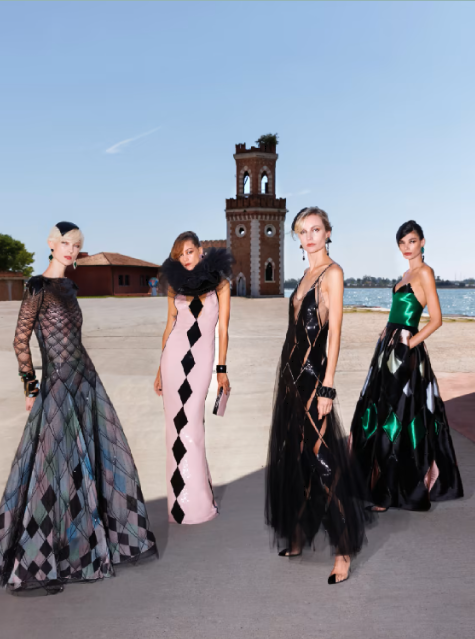
Giorgio Armani began his career in menswear, designing for established Italian houses before launching his own label alongside business partner Sergio Galeotti. His breakthrough wasn’t only aesthetic—it was structural. Armani deconstructed the suit, loosening shoulders and softening lines so tailoring felt natural rather than armored. The result was a new style of authority: modern, minimal, and wearable.
The 1980s Power Suit and Cultural Takeover
Armani’s rise exploded internationally in the late 1970s and early 1980s. A defining moment came with American Gigolo (1980), where Richard Gere’s Armani wardrobe turned tailoring into cinematic fantasy and made the brand synonymous with sleek sophistication.
At the same time, women embraced Armani’s relaxed suits, helping define the power-dressing era. The oversized Armani silhouette became a uniform for ambition in boardrooms, politics, and red carpets—elegant but practical, commanding but not rigid.
The Armani Brand Family Today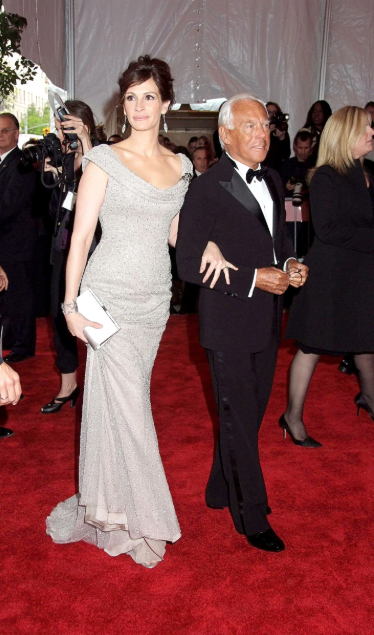
A major brand reorganization in 2017 streamlined the Armani portfolio into three core fashion labels, each aimed at a distinct audience.
1) Giorgio Armani
The flagship luxury line—refined ready-to-wear, formalwear, accessories, and the purest expression of Armani tailoring. This is “quiet luxury” in its most disciplined form.
2) Emporio Armani
A younger, more trend-aware label with runway energy and modern graphics, while still anchored to Armani’s clean, metropolitan style.
3) A|X Armani Exchange
The most accessible line, positioned for a broader, casual market with a more street and logo-led feel.
EA7
A performance-driven athleticwear extension under Emporio Armani, launched to bring Armani style into sports and technical apparel.
Armani Privé: Couture With Controlled Glamour
If ready-to-wear is Armani’s daily uniform, Armani Privé is its dreamscape. The couture line is known for intricate craftsmanship, fluid evening silhouettes, and major red-carpet presence. It maintains the Armani principle that glamour can be dramatic without ever becoming loud.
Beauty and Fragrance: Armani’s Aesthetic on Skin
Armani translated its fashion DNA into beauty with striking success. Armani Beauty and Armani Privé fragrances emphasize sensual refinement—polished, minimal packaging and scents that feel luxurious but modern. For many consumers, fragrance is the first doorway into the Armani world.
Armani/Casa and the Lifestyle Expansion
In 2000, Armani launched Armani/Casa, proving that a fashion vision could extend coherently into interiors. The home line mirrors Armani’s fashion philosophy: fine materials, calm palettes, sculptural simplicity. Armani/Casa helped normalize the now-common idea of fashion houses becoming full lifestyle brands.
Hotels, Clubs, and Culture: The “Armani Universe”
Armani’s reach goes beyond products into lived environments:
-
Armani Hotels (notably Milan and Dubai)
-
hospitality and dining spaces
-
the Armani/Privé club
-
Armani/Silos, the museum/archive in Milan that cements the house’s cultural legacy. armani-production+1
Rather than random side ventures, these spaces reinforce Armani’s core mood: controlled elegance, comfort, and quiet prestige.
2025: Giorgio Armani’s Death and the Succession Plan
Giorgio Armani died on September 4, 2025, at age 91. Coverage emphasized how rare his independence was in modern luxury: he kept Armani privately owned and personally directed through his life.
His will outlines a clear transition:
-
70% of voting rights go to the Fondazione Giorgio Armani and his long-time partner/executive Pantaleo Dell’Orco.
-
The foundation is instructed to sell an initial 15% stake within 18 months, with a gradual increase to 30–54.9% within five years, favoring buyers such as LVMH, L’Oréal, or EssilorLuxottica. If no suitable buyer emerges, an IPO is an option.
This is a dramatic pivot for a house that resisted outside influence for half a century—and it marks Armani’s biggest structural change since its founding.
Why Armani Still Matters
Armani’s lasting impact is not any single product but a rewired idea of luxury:
-
Luxury can be quiet.
-
Power can be soft.
-
Elegance can be functional.
In an era of hype and maximalism, Armani’s calm precision—sharp tailoring, muted color, impeccable cut—remains the benchmark for timeless modern style. That’s why the house continues to define “quiet luxury” long after the trend label caught up.
The Takeaway
Armani is a rare kind of fashion empire: a brand built on a single, disciplined vision that expanded into every corner of luxury life. With Giorgio Armani gone, the company now faces a new test—how to preserve an aesthetic so personal it became a universal language. But because Armani’s style is so clearly codified, the brand enters its next chapter with something most houses don’t have: a blueprint for timelessness.