

GameStop is a company that’s lived three lives in one generation. First, it was the go-to mall retailer for physical video games. Then, in 2021, it became the world’s most famous “meme stock,” symbolizing the power—and chaos—of online retail investors. Now, in 2024–2025, GameStop is trying to build a smaller but profitable version of itself while making unusually bold capital-allocation moves, including adding Bitcoin to its treasury. Here’s the full story of where GameStop came from, what changed, and what it’s trying to become next.
TL;DR:
GameStop began as a physical video-game retailer built on new and used game sales, consoles, and trade-ins, but struggled as gaming shifted to digital. In 2021 it became a global “meme-stock” symbol during a historic short squeeze that boosted its cash and visibility. Under CEO Ryan Cohen, GameStop has shrunk its store footprint (hundreds closed in fiscal 2024 with more planned for 2025) and focused on profitability.Its recent growth is coming mainly from hardware/accessories and especially collectibles/trading cards, while software sales keep declining. In 2025, GameStop made a bold treasury shift by adopting Bitcoin as a reserve asset and buying 4,710 BTC (~$500M), adding potential upside but also big balance-sheet volatility.
1) The Original GameStop: A Physical-Game Powerhouse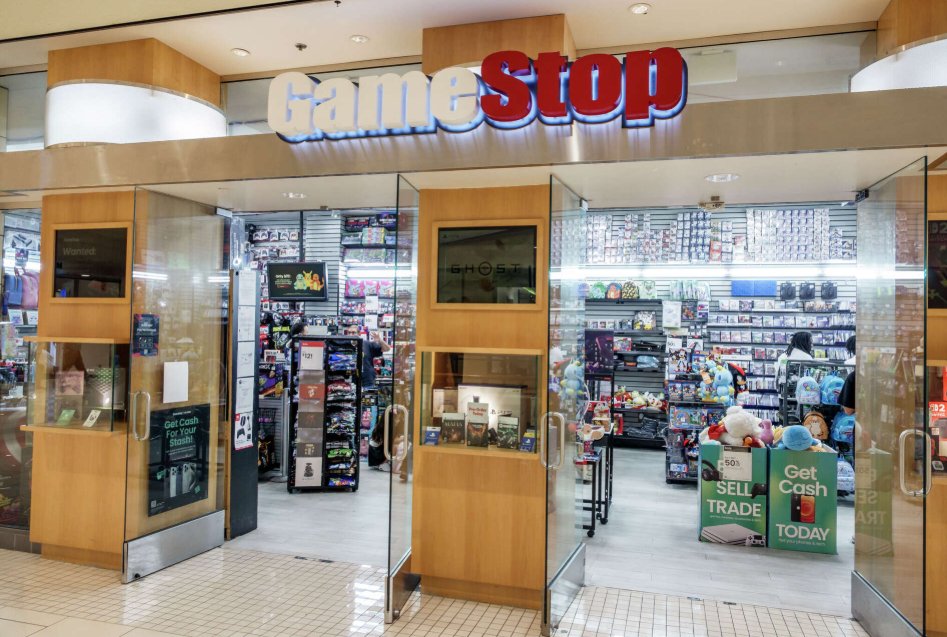
For decades, GameStop’s business model was straightforward: sell new and used video games, consoles, and accessories through thousands of stores. The used-game trade-in cycle was its secret weapon—customers traded old games for credit, and GameStop resold them at high margins. That flywheel worked especially well around console launches.
But the industry moved under its feet. As gaming shifted toward digital downloads, subscriptions, and direct online sales, fewer people needed discs or in-store trade-ins. Foot traffic declined, and GameStop entered the late 2010s as a legacy retailer in a fast-digitizing market.
2) The 2021 Short Squeeze: How GameStop Became a Cultural Event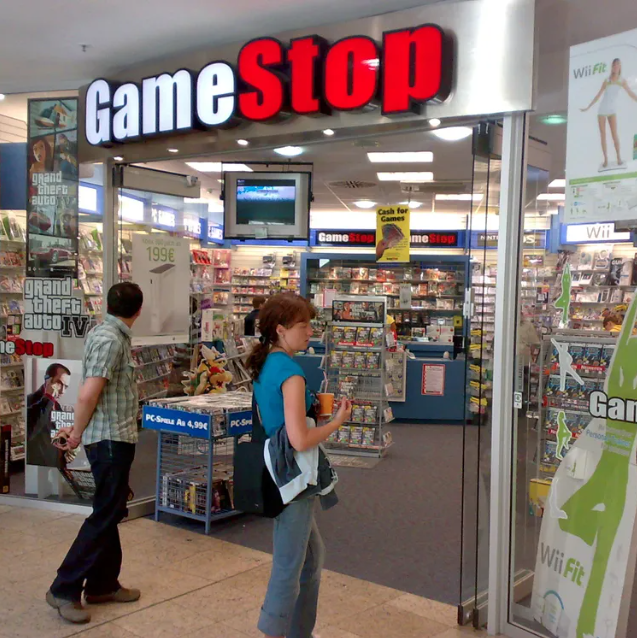
In January 2021, GameStop’s stock (GME) rocketed in a historic short squeeze. Retail investors—organized largely through Reddit’s r/WallStreetBets—piled into the stock to bet against hedge funds that had heavily shorted it. Short interest had exceeded the public float, and as prices rose, short sellers were forced to buy back shares, pushing the price even higher.
The squeeze did more than create market headlines:
-
It turned GameStop into a global symbol of retail-investor rebellion.
-
It gave the company the ability to raise fresh capital in later offerings.
-
It created a shareholder base emotionally invested in a turnaround narrative.
GameStop didn’t suddenly become a strong retailer again—but it became a company with attention, cash, and a second chance.
3) Ryan Cohen and the Turnaround Playbook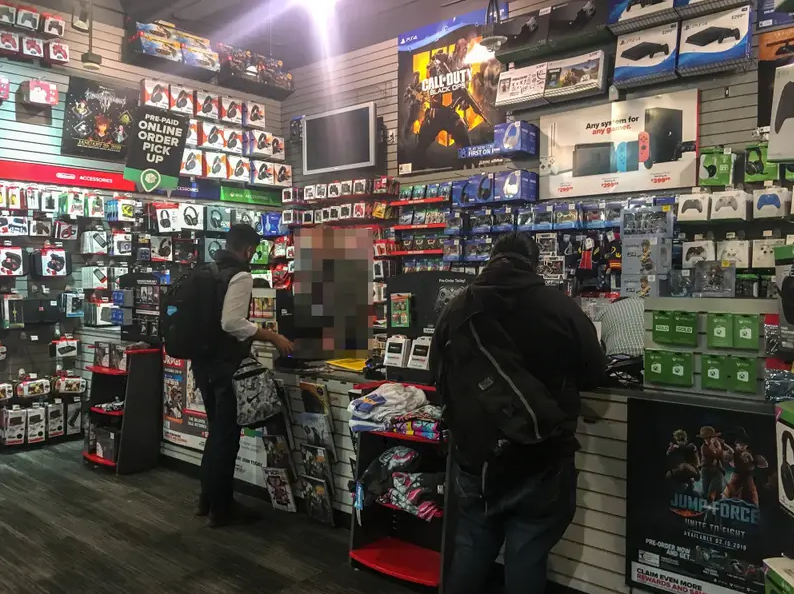
Chewy co-founder Ryan Cohen joined GameStop’s board in 2021, became chairman, and later CEO. His approach has been less “build a giant e-commerce rival overnight” and more:
-
cut costs hard,
-
shrink to profitable core stores,
-
redirect focus to categories that still work,
-
treat cash as strategic ammunition.
GameStop’s recent filings emphasize optimizing the core business for profitability and investing cash only where returns justify it.
4) What GameStop Sells Now: Hardware + Collectibles Over Discs
The company’s product mix has clearly shifted. While physical game software still matters, the growth lanes in 2024–2025 are:
-
hardware & accessories (consoles, controllers, PC gaming gear)
-
collectibles (trading cards, figurines, pop-culture merchandise)
This pivot showed up in recent results. Management has highlighted stronger performance in these categories even as older disc-based sales stay pressured by digital competition.
The logic is simple: if gamers aren’t buying discs, sell them the stuff around the hobby—hardware and fandom goods that remain physical.
5) Shrinking Stores to Survive (and Possibly Thrive)
Store closures are not a side note; they’re central to the turnaround. In fiscal 2024 (ending Feb 1, 2025), GameStop closed 590 U.S. stores and said more “significant” closures are expected in fiscal 2025.
Why this matters:
-
Fewer stores reduce rent and labor costs.
-
The company concentrates on locations that still perform.
-
It accepts that the old footprint was built for a physical-media era that’s fading.
Think of it as GameStop choosing to be smaller and profitable rather than large and bleeding cash.
6) Recent Financial Trend: Profit Up, Sales Down
GameStop’s profitability has improved, but not because revenue is booming.
Fiscal 2024 net sales were reported at $3.8B, down sharply year-over-year, yet Q4 profit rose to about $131M as expenses fell.
In plain terms:
GameStop is getting healthier by cutting costs faster than sales are falling. The big question is whether it can stabilize revenue while staying lean—because a shrinking top line can’t be ignored forever.
7) The Wildest Move Yet: Bitcoin as a Treasury Asset
In March 2025, GameStop’s board unanimously approved adding Bitcoin as a treasury reserve asset, explicitly echoing the corporate BTC strategy popularized by Strategy (formerly MicroStrategy).
Reports later confirmed GameStop made a major purchase—4,710 BTC—worth roughly $500+ million at the time, funded after large capital raises.
Why it’s a big deal:
-
It turns part of GameStop into a capital-allocation story, not just a retail story.
-
It adds serious balance-sheet volatility: upside if BTC rises, pressure if it drops.
-
It re-energizes meme-stock style attention, for better or worse.
This is a high-risk, high-optionality bet—very different from how most retailers manage cash.
8) What GameStop Is Trying to Be Next
As of late 2025, GameStop looks like a hybrid:
-
A smaller, profitability-focused physical retailer centered on hardware and collectibles.
-
A company willing to take unconventional treasury bets using its large cash position.
Its future depends on three tough questions:
-
Can a physical retailer stay relevant in a digital-first gaming world?
-
Are collectibles a durable growth category or a cyclical boom?
-
Does Bitcoin treasury policy create shareholder value or instability?
If Cohen’s plan works, GameStop becomes a lean specialty retailer plus an opportunistic capital-allocator. If it fails, it risks becoming a great balance sheet sitting on a shrinking business.
Bottom Line
GameStop’s story is no longer just retail—it’s a case study in how a legacy company can be transformed by culture, capital markets, and bold leadership choices. The mall-store era built the brand. The 2021 short squeeze gave it oxygen. Now the 2025 era tests whether it can turn those gifts into a sustainable next act.